
“The challenge sits less with winning work, and more with how we deliver the work we have already won.”
That comment, shared with us by a major tier-one Aerospace & Defence client at Farnborough International Airshow, captured the mood of the day. Demand is strong. Investment is visible. The market is full of opportunity. But the organisations that will win are those with the operational capacity, supply chain resilience and leadership depth to convert demand into delivery.
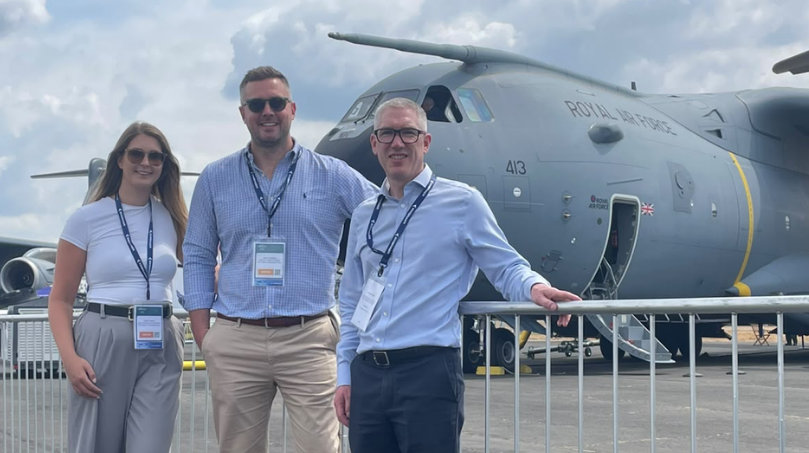
Gavin Wingfield, Jerome Bull and Louise Holmes from NSCG’s Industrial Practice attended the show for a packed schedule of client meetings, including conversations with Zenix Aerospace, GKN Aerospace, TT Electronics, Senior plc, Trelleborg, RLC Aerospace and Nasmyth Group.
Beyond the theatre of the air displays, the key message was practical and urgent: industrial capability is moving centre stage. Defence manufacturing, autonomy, AI, drones, advanced manufacturing, engine capacity, MRO and supply chain resilience are no longer future-facing discussion points — they are live delivery challenges.
Five themes stood out:
- Defence manufacturing is setting the tone, fuelled by global security concerns, increased spending and a renewed focus on sovereign industrial capability.
- AI, autonomy, drones and uncrewed systems have moved firmly into the mainstream.
- Supply chain reliability, production ramp-up and delivery performance remain the sector’s biggest pressure points.
- Engine manufacturing and MRO continue to be critical bottlenecks, attracting significant attention and investment.
- The strongest businesses are thinking internationally — building capability, partnerships and leadership depth across markets.
What this means for hiring and leadership development
- Demand is rising for leaders who can scale operations, unlock supply chain performance and accelerate production programmes.
- Digital, AI, autonomy, advanced manufacturing and systems engineering capability will become increasingly valuable in leadership teams.
- Programme leadership, operations, supply chain, engineering and manufacturing transformation are likely to remain priority hiring areas.
- Defence experience is becoming more transferable and more valuable, including for leaders moving from adjacent aerospace and advanced manufacturing environments.