
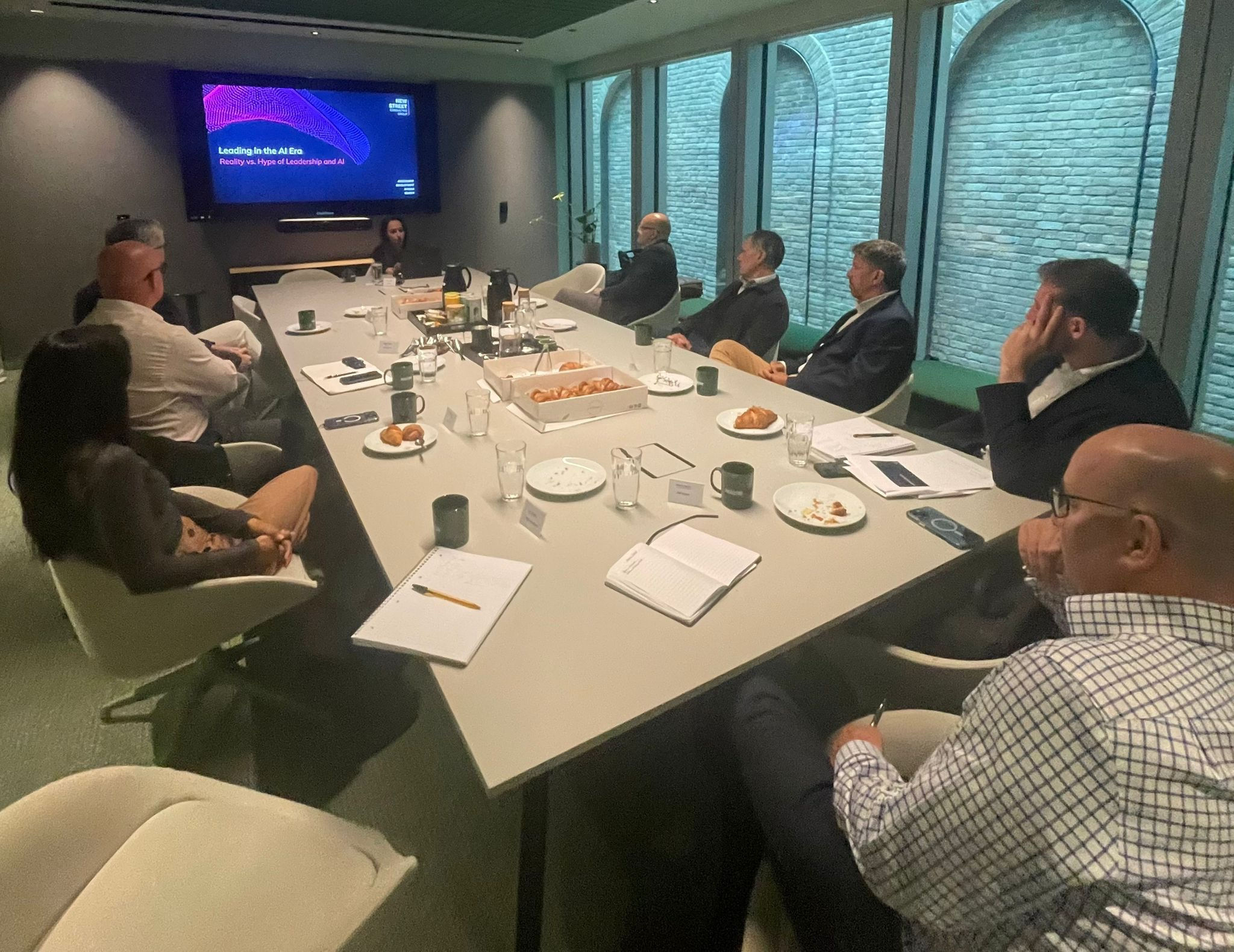
AI is becoming an increasingly prominent part of how FMCG organisations operate, but the conversation is evolving quickly. At our latest Breakfast Forum, senior leaders shared perspectives on how they are approaching this shift, with a clear focus on moving beyond experimentation toward practical, operational impact.
While AI was the starting point, the discussion quickly broadened into a more fundamental question: how can it be used to improve business performance in a meaningful way?
From AI to operational improvement
A consistent theme was the move away from viewing AI as a standalone priority. Instead, leaders are reframing the conversation around a set of core business questions: how to reduce costs, how to drive revenue growth, how to better understand customers, and how to deliver more output with existing resources.
This aligns closely with findings from our Future Leaders Survey, which highlights a shift in leadership towards orchestrating how people, technology and workflows combine to drive outcomes, rather than focusing on individual tools in isolation.
AI adoption: accessible, but not always effective
There was broad agreement that AI will continue to become more accessible and embedded in day to day operations. However, this raised an important challenge around effectiveness.
Use cases discussed included improving customer insight, enhancing decision making and supporting large scale system environments. Despite this, there was a sense that many organisations are still early in translating capability into consistent value, reflecting wider market trends where AI maturity remains a work in progress.
Adoption outpacing operational readiness
A clear observation from the group was that, in some cases, adoption is moving faster than organisational readiness. New technologies are being introduced without the structure or operational foundations required to fully support them.
This reflects the need to close what our research defines as the workflow gap, ensuring that processes, accountability and ways of working evolve alongside technology in order to unlock value.
Leadership judgement remains critical
AI is beginning to play a greater role in shaping decision making, particularly through improved access to data and insight. However, there was strong alignment that it must remain a support tool, not a decision maker.
Leaders emphasised the importance of challenging outputs, applying context and retaining accountability. This links to two further leadership shifts identified in our research: recognising AI’s role within the organisation, and building trust through clear governance and oversight.
People and change as the defining challenge
While much of the discussion centred on AI, the most significant barrier identified was not technological, but human.
Driving meaningful change continues to depend on leadership capability, behavioural change and a willingness to adopt new ways of working. As AI becomes more embedded, leaders must also rethink how they engage, motivate and develop their teams, reflecting a broader realignment of the psychological contract at work.
Future capability and hiring
The implications for talent were also a key focus. Organisations are increasingly asking how to identify the skills required for the future and build effective hiring strategies around them.
For some, this includes challenging traditional approaches to growth by asking what can be automated or improved before adding cost through headcount.
The key question: how to drive impact
Across the discussion, the focus remained firmly on execution: how to use AI to genuinely improve performance, rather than simply increase activity.
These themes reflect the five shifts we are seeing across leadership today: orchestrating complex systems, recognising AI’s role, building trust, realigning expectations and closing the gap between technology and execution
You can now download the full report: The Leadership Evolution: Reality vs. Hype of Leadership and AI.
Looking ahead, our next forum will continue this discussion, with a focus on how organisations can operate more effectively in practice, not just how they adopt new technology. Sign up now!