
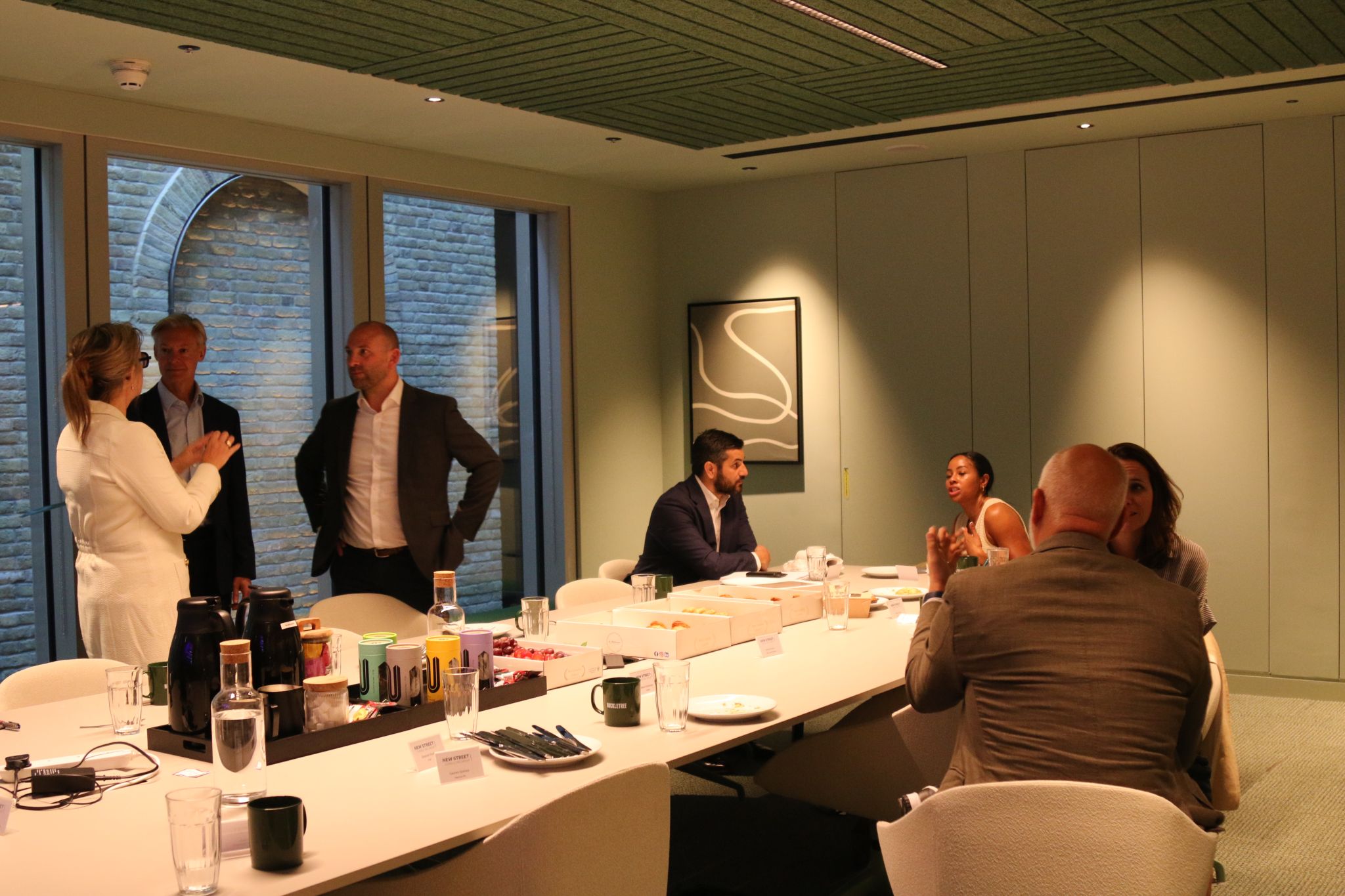
AI is rapidly reshaping how organisations operate, but adoption is moving at very different speeds. At our latest CPO Breakfast, senior leaders shared candid insights on how they are navigating this shift, highlighting the growing importance of trust, the challenges of governance, and the practical steps needed to turn early experimentation into measurable value.
The session highlighted a clear divergence in maturity, alongside a shared focus on how to translate experimentation into meaningful business impact.
AI adoption: moving at very different speeds
A consistent theme was the variation in how far organisations have progressed:
- Some are already embedding AI into core processes, including the use of AI for first-round telephone interviews and coaching solutions
- Others remain at an earlier stage, with manual processes still dominant and relatively limited exposure to newer tools
In more advanced organisations, AI is being integrated in a structured way, including:
- Development of internal large language models (LLMs)
- Embedding AI within existing HR systems such as performance management platforms
- Creating regular forums for managers to share learnings, risks, and practical use cases
- Introducing simple controls, such as guidance around clearing prompts and chat histories
This contrast in approaches underlined how quickly the AI maturity gap is widening.
Bottom-up adoption and the governance challenge
There was broad agreement that:
- AI adoption is largely bottom-up, driven by individuals and teams experimenting in their day-to-day roles
- Organisational governance frameworks are struggling to keep pace with usage
In many cases, younger or more digitally confident employees are leading the way, creating momentum that is ahead of formal leadership direction. This dynamic is making it increasingly difficult for organisations to balance innovation with risk management.
Trust at the centre of the conversation
Trust emerged as a central theme throughout the discussion:
- Trust in the accuracy and reliability of AI outputs
- Trust in how employees are using AI responsibly
- Trust from leadership in scaling usage safely
Participants agreed that without building confidence at all levels of the organisation, adoption will stall. Trust is therefore becoming a critical enabler of progress.
From experimentation to ROI
The conversation is now shifting decisively from experimentation to measurable outcomes:
- Some organisations are already estimating multi-million pound cost savings from AI adoption
- This is particularly pronounced in cost-focused environments, where efficiency gains are a key priority
There is a growing expectation that AI initiatives must demonstrate clear value, whether through:
- Cost reduction
- Productivity improvements
- Automation of routine tasks
AI is not just a technology play
A key takeaway was that successful AI adoption extends beyond technology:
- It requires ownership across the business, not just within IT
- There is a strong human and behavioural component to driving adoption
Leaders emphasised the importance of:
- Supporting employees to build confidence
- Encouraging experimentation within clear boundaries
- Embedding AI into everyday ways of working
Lower barriers, faster innovation
Participants also noted how quickly AI capabilities are evolving:
- Building AI agents and automated workflows is becoming significantly easier
- A growing ecosystem of specialised tools is enabling faster deployment across functions
This acceleration is lowering barriers to entry, while increasing the urgency for organisations to define where AI can deliver the most value.
The key question: how to move the dial?
Across the discussion, the core focus was practical:
How do organisations accelerate AI adoption while maintaining trust and control?
The emerging consensus was that progress depends on:
- Focusing on high-impact, clearly defined use cases
- Creating lightweight, adaptable governance approaches
- Investing in trust-building, capability development, and change management