
Succession Planning: Reducing Leadership Dependency and Building Leadership Depth
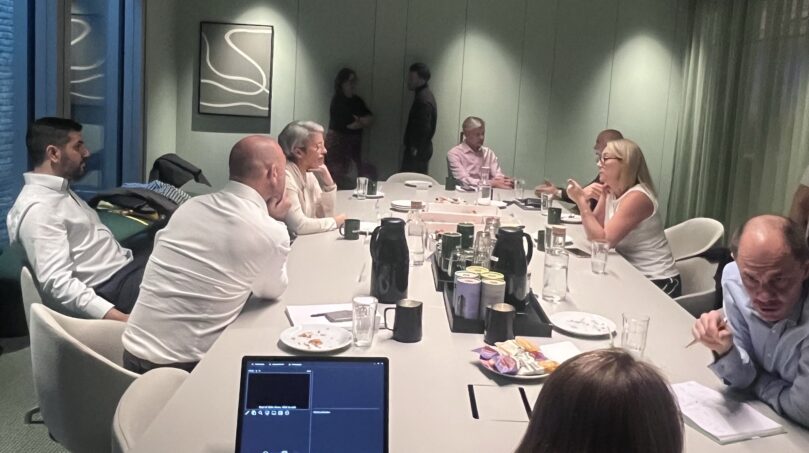
Most organisations recognise that succession planning matters. At this month’s CPO Breakfast Forum, we started by discussing the different journeys organisations are on with succession planning and some of the challenges they are encountering in making it work in practice.
A few themes quickly emerged. For some, succession planning risks becoming a tick-box exercise rather than something that actively shapes decisions. For others, there is almost the opposite problem: succession planning can be too successful, creating a strong layer of capable people below the C-suite without enough opportunities for them to step up.
The room’s view was that succession planning still has an important role to play, but that how it is used, and who owns it, makes all the difference.
When the plan doesn’t shape decisions
Several people described a similar pattern. Succession planning tends to happen when necessary and produces a useful snapshot of talent, but isn’t always revisited until the next cycle comes round.
- When a senior role comes up, the decision can be made quickly, with less reference to the plan than intended.
- Over time, this can make the process feel more like a formality, and executives engage with it less.
- There was also the challenge of what happens when succession planning works well: strong successors are identified and developed, but limited movement at the top means there isn’t necessarily somewhere for them to go.
Few around the table thought the answer was to scrap succession planning. The bigger issue was ownership and purpose.
Who is it for?
This led to an honest discussion about why organisations do succession planning in the first place.
- For some, it exists partly for investors, regulators and the board. It demonstrates that appropriate governance is in place.
- That has value, especially in financial services. But a plan created primarily for governance purposes is less likely to influence who gets developed, moved or promoted.
- The more useful question is whether it helps the organisation understand and manage leadership risk, while building greater depth of capability below the top team.
This belongs to the C-suite
There was strong agreement that succession can’t sit with the People team alone.
- Executive teams are carrying more change than ever, and they can only deliver it if there are capable leaders underneath them.
- That makes succession a business continuity issue, and one the whole C-suite should care about.
- Ultimately, succession is owned by the C-suite. The People team is the conduit for its delivery, providing the process, insight and challenge that enables executives to own the succession picture for their areas.
Using data to get ExCo’s attention
So how do you get a busy executive team to take it seriously? Data came up again and again.
- Showing where the business depends on one or two individuals, how ready successors really are, and what it would cost to replace someone externally tends to land far better than talent language.
- Once the conversation is about risk and delivery, rather than development for its own sake, executives are more willing to engage.
Internal successors and external hires
Nobody argued for relying only on internal talent or only on the market.
- Promoting from within helps with continuity, culture and retention.
- Hiring externally brings in experience the business may not have, which matters more when the strategy is shifting.
- Most felt the right mix depends on the role, and that this choice should be made deliberately rather than by default when a vacancy appears.
Technology and data
The last part of the session looked at how technology can help.
- Better information on skills, performance and potential means succession can be reviewed throughout the year, not just at the annual cycle.
- It can also help spot people who aren’t yet on senior leaders’ radar, which widens the pool and reduces reliance on the same few names.
- Simplicity matters as much as data. HRIS systems that are easy to use and well designed make it far more likely that leaders will engage with succession, rather than seeing it as another admin task.
Questions for people leaders
- Is your succession plan helping you manage leadership risk, or has it become part of the annual process?
- Does your ExCo genuinely own the succession picture, or mainly review it once a year?
- What happens to your strongest potential successors if there isn’t an obvious role for them to move into?
- What data would change how your executive team sees leadership risk?
- Which roles should you be developing for internally, and which are you likely to hire for?
The general feeling was that succession planning earns its place when leaders actually use it to make decisions. That means C-suite ownership, with the People team acting as the conduit for delivery, good data, and a steady focus on building leadership depth, not just naming a successor for each role.